Advanced Fiscal Management

Course Description:

This course is intended to provide students with advanced concepts of financial management as applied to the unique industries of parks, recreation, tourism, and sport management. Emphasis will be placed on understanding how the receipt, disbursement, and utilization of funds can foster sustainability within these types of organizations. Additionally, this course will focus on developing the skills necessary to apply ethical financial analysis principles through financial risk management.

Learning Objectives:

Students will:

• Learn advanced financial theories as related to parks, recreation, tourism, and sport management organizations

• Apply analytical techniques and principles of budgeting to enable sustainability

• Discuss and apply current financial practices as they relate to the generation, consumption, and disbursement of funds

• Discuss and apply ethical financial analysis to the current economic situations within parks, recreation, tourism, and sport management organizations

Reflection:

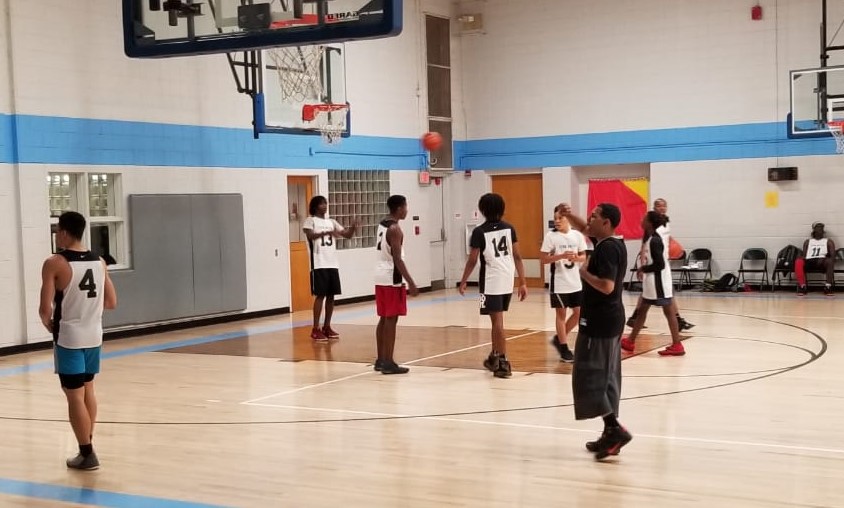
Unlike many other cohorts, this was our first course in the program. This course was beneficial for me on different levels. First, as an employee of a government entity (Mecklenburg County Park and Recreation Department), this course was extremely relevant as it delved into public funding and managing of assets. Secondly, this course provided practical knowledge for me, as I was actively establishing an Independent Interscholastic Preparatory Athletic Program, during the start of the program (fall ’18). As the course delved into financial theories, practices, budgeting, and financial analysis, it proved invaluable while establishing sound financial practices for this newly established sports program.
Sport and Entertainment Venue Management-Operations and Services

Artifact Caption:

Title: Corporate Sponsorship Proposal for Pepsi Co

Author: Chea Johnson

Date: February 20, 2020

Reflection:

The final assignment entailed developing a corporate sponsorship proposal for Pepsi Co. In the development of the proposal we used concepts and approached discussed throughout the course. One such concept was the “Ground Up” approach, which involved meeting with perspective sponsor to conduct a “needs analysis”. This needs analysis involved listening to specific needs, expectations, and goals that prospective sponsors desire out of the partnership. This approach has proven to assist in cultivating a positive relationship and build up trust between the two organizations.

Key elements of a corporate sponsorships are length of agreement, inventory being offered, and monetary contribution for sponsorship. This corporate sponsorship agreements sought a three year commitment. Inventory offered to Pepsi Co. in this proposal were Beverage were Pouring Rights, Advertising Signage, Media Advertising, and Additional Advertising.

A successful corporate sponsorship proposal effectively details mutual benefit for the corporate sponsor, the fans, and the sports and entertainment venue. This proposal demonstrated how Pepsi Co. would have access to thousands of fans and patron that attend events at the venue, providing the opportunity for Pepsi Co. to market its brand products to thousands of customers. Fan experience is enhanced by Pepsi Co. providing quality beverage choices to patrons. Lastly, with the need to maximize revenue and profits, corporate sponsorship provide additional revenue streams which contribute to the economic stability of the sports and entertainment venue.

Mentoring Tourism Microentrepreneurship

Artifact Caption:

Title: Oral History of a Tourism Microentrepreneur

Author: Chea Johnson

Date: April 5, 2020

Reflection:

This assignment required we interview a tourism microentrepreneur in our community. I was fortunate to Interview Maureen Johnson owner of Legacy Travel and Tours, located in Charlotte, NC. During the taped interview the microentrepreneur detailed their motivations, struggles, preferred networking processes, and self-defined successes during their career as tourism microentrepreneur. I thoroughly enjoyed the process of interviewing Maureen Johnson and gained a deeper insight into challenges and rewards of being a small business owner in the tourism industry.

The project required that I follow prescribed processes of how to collect, analyze and share data about the characteristics, needs and assets of microentrepreneurs. The assignment required I develop an interview protocol with a list of questions about the microentrepreneur’s life journey and the meaning of life, their involvement in tourism microentrepreneurship. The this process and discussions had with the selected microentrepreneur, help expand my knowledge of the challenges and obstacles microentrepreneur face, and empowered me with a higher degree of understanding of what solutions can benefit tourism microentrepreneurs.

Sustainable Tourism and Evaluation

Artifact Caption:

Title: Determining the Economic Sustainability of Mike’s Farm and Restaurant

Author: Chea Johnson

Date: July 25, 2019

Reflection:

“Sustainable Tourism” is the concept that challenges the tourism industry to make a positive impact on the environmental, economic, and socio-cultural of the host community. The final project required that a tourism destination be analyzed to see if they successfully maintained one of the three pillars of sustainability (environmental, economic, and socio-cultural). The final assignment was completed as a group project between myself ant two fellow classmates.

This final assignment required our group to select a tourist destination an analyze how sustainable they are in one of impact areas (environment, economy, and socio-cultural) of the host community. We selected Mike’s Farm and Restaurant located in Beulaville, just outside of Jackosnville, North Carolina. This destination is a multi-generational family farm that has been a leader in agritourism. We focused on the dimension of Economic Sustainability of Mike’s Farm and Restaurant.

The methods we used to measure the economic sustainability were continuous business growth, seasonal employment for local residents, and maintaining a high percentage of business from military families. Our findings were secured by interviewing the owner, surveying customers, and company website. Through our research we discovered that Mike’s Farm and restaurant had a direct economic impact on the host community by providing salaries to local residents. There were indirect economic impacts, as the farm attracted tourist into the host community which contributed to the economic growth of other businesses within the community.

Through our research we determined that Mike’s Farm and Restaurant was Economically Sustainable for the community they operated in. The assignment gave us a deeper understanding and appreciation for the impact tourist attractions have on their host community. Host can benefit tremendously when tourist attractions are committed to being vested in sharing the economic growth and prosperity with residents in the form of jobs, salaries, improved infrastructure and quality of life.

Sport and Entertainment Venue Management – Operations and Services

Course Description:

A thorough background on operations and services is essential for sport and entertainment venue managers. This course examines venue management by covering essential managerial functions. These include booking and scheduling venues, recruiting and training staff, managing volunteers, box office operations, crowd and crisis management, facility operations and repair, and enhancing the fan experience.

Learning Outcomes:

  1. Recognize policies and procedures related to scheduling and booking venues.
  2. Describe the duties associated with ticketing and operating a box office.
  3. Describe the processes for effective crowd, emergency, and crisis management.
  4. Create procedures for facility operations and repair.
  5. Manage volunteers and establish staffing needs and responsibilities for an event
  6. Articulate the role of customer service in facility management.

Reflections:

This course thoroughly detailed the full scope of managing large public assembly venues. The course began with covering historic evolution of public assembly venues and venue types. Material covered all aspects of public venue management from booking procedures, to hiring and training staff, safety and security procedures, and the process and importance of obtaining corporate sponsorships. We were also exposed to the inner workings of the “front of the house” and “back of the house” operations such as box office, customer service roles, crowd management, facility maintenance, facility operations and their importance in successfully managing public assembly venues.

Mentoring Tourism Microentrepreneurship

Course Description:

In this course students will learn how to mentor tourism microentrepreneurs so as to a) assist them in achieving their goals, and b) leverage their integration in the tourism system to fuel destination equity and competitiveness. The course is grounded in scholarly knowledge and practical experience mentoring tourism microentrepreneurs in partnership with civic organizations, destination management organizations, and private tourism companies. Students will be encouraged to utilize and share their professional expertise in the public or private sector, and their familiarity and intrinsic interest in their home region or another familiar destination.

Learning Objectives:

  • Evaluate ​the degree to which microentrepreneurs are symbiotically integrated into a destination’s tourism system and are shaping its competitiveness.
  • Apply​ participatory action research methods to mentor microentrepreneurs on how to achieve their goals and on how to make their destinations more competitive and equitable.
  • Explain​ the motivations, common needs, preferred networking processes, and self-defined success of tourism microentrepreneurs.
  • Use​ web-based applications to amplify the voice of underserved microentrepreneurs and to connect them with markets and support organizations.
  • Identify​ approaches for microentrepreneurs to develop win/win partnerships with private companies and civic organizations.
  • Analyse​ the ways in which local governments engage with tourism businesses (e.g., marketing, financial support) in an attempt to be a competitive destination and fuel economic growth.

Reflection:

The course detailed how important the role microentrepreneurs can play in enriching a tourism destination, and in assuring that the economic force of tourism can be harnessed by host communities to fuel equitable and sustainable prosperity. The course highlighted how microentrepreneurs in tourism can be marginalized within tourist industry. Assignments demonstrated how mentors can assist microentrepreneurs access markets, methods of reaching new customers, and increasing revenue streams for microentrepreneurs in tourism.

Sustainable Tourism and Evaluation

Course Description:

This course is designed for students who are interested in understanding the concepts of sustainability in the area of tourism marketing and management. This course is also relevant for students with an interest or position in data analysis/evaluation responsibilities in the tourism industry. The course will focus on introducing and applying a set of indicators to monitor the sustainability of a tourism entity or at the destination level. We will conclude the course by sharing best practices in communicating results of evaluation projects to support Destination Management & Marketing Organizations (DMMOs) and their partners in strategic planning, marketing and management decisions.

Learning Objectives:

• Understand the components of the destination development, and explain the Tourism Area Life Cycle model

• Recognize how tourism assists in the development of a community’s livability and economy

• Understand the process of evaluation for tourism destination management

• Understand the concepts and indicators of sustainable (tourism) destination management to monitor sustainability of a product, entity, or destination

• Identify main areas of tourism planning and decision making that could benefit from sustainability evaluations

• Identify and evaluate methods for measuring tourism impacts on destinations and find the most suitable method (based on time and budget limitations) to collect data

• Communicate the evaluation results and recommendations to a diverse audience of tourism stakeholders and decision makers

Reflection:

This course introduced the concept of sustainable tourism, which is the concept of tourism making a positive impact on the environment, society, and economy of the host community. Sustainable tourism aims to provide a positive experience for local people; tourism companies; and tourists themselves. This course detailed methods to analyze and measure the positive impact of tourism in a host communities.

Risk Management

Artifact Caption:

Title: CEA Risk Management Plan

Author: Chea Johnson

Date: June 17, 2019

Reflections:

This capstone assignment allowed me to put practical application of knowledge and skills learned during this course. I choose to develop a comprehensive risk management plan for Charlotte Elite Academy, a sports academy which offers performance training and competitive sports competition. This assignment provided me the opportunity to put practices and procedures in place to help protect critical aspects of Charlotte Elite Academy, which included safety of its players, staff, visitors, assets, operations, and continuity of operations when and if disruptions occur.

There where some risk management policies and practices previously in place, however this assignment brought attention to specific areas that where not addressed. Elements that have been adopted as policy and written in Charlotte Elite Academy’s risk management plan are areas such as a written Concussion Policy, Accident/Incident Reporting Policy, Emergency Action Plan (EAP), Travel Policy, Policy for use of personal vehicles, Waiver/Permission to Transport Students, Methods to Reduce Abuse and Molestation Claims, and an Establish Employment Guideline detailing employment process.

This assignment was critical in developing additional policies and practices to protect this newly formed sports organization. Completing the assignment developed in me an increased awareness of potential threats to the organization and steps to minimize and/or eliminate potential threats that could disrupt operations of the organization.

Strategic Marketing Management

Artifact Caption:

Title: Marketing Plan for Charlotte Elite Academy 2019

Author: Johnson

Date: February 24, 2019

Reflections:

This final project involved detailing the current market position and specific marketing strategies set by the organization. To establish an effective marketing plan , I needed to take an in depth look into the internal and external factors impacting Charlotte Elite Academy. In the development of the marketing plan I analyze organizational strengths, weaknesses, competitors, and customer base, which assisted in the process of developing messages that detailed how the organization stands out from its competition.

Performing an internal analysis of Charlotte Elite Academy highlighted the strengths and weaknesses of the organization, which was an integral component in the development of this marketing plan. Identifying an organizations strengths helps the marketer understand what elements and characteristics to promote to consumers. Identifying and acknowledging weaknesses helps organization recognized potential threats and areas needed for improvement.

Understanding external elements that impact an organization must also be analyzed. An awareness of your competitors and being able to compare and contrast products and services help when delivering messages that demonstrate product differentiation. Understanding and identifying the customer base and tailoring marketing messages was a crucial element of the project.

Another key component to the development of the marketing plan is defined marketing tactics. Marketers must consider the specific methods of delivering marketing messages. In this plan there were several methods highlighted. The use of traditional media (print, radio), social media, and word of mouth were the most effective and cost efficient methods of delivering marketing messages.

Orgnizational Behavior and Leadership

Artifact Caption:

Title: Reframing Charlotte Elite Academy

Author: Chea Johnson

Date: October 15, 2019

Reflections:

This Organizational Behavior & Leadership course introduced my to the concept of “refraiming”. The course demonstrated how you can analyze the behavior and leadership of an organization focusing on 4 keys areas; Structural, Human Resources, Political and Symbolic. With this foundation and perspective we were required to examine an organizations that we work with using the tools that we learned throughout the course.

I selected Charlotte Elite Academy a Sports and Academic Performance Academy. This analysis examined the organizations leadership, environment, human resource process, company culture and politics, strategic plan, methods of measuring the effectiveness of meeting organizational goals, and how to approaches organizational change. The assignment also analyzed perceived problems the organization is facing, and developed strategies to overcome perceived problems. The final step in the organization analysis was to prospect the future and offering suggestions to stay relevant and competitive in an ever changing business landscape.